



Let’s be real. People are busy, and attention spans are short these days. Social media is full of short videos, and many people prefer to quickly scan articles or listen to the audio transcript online. Does that mean that long-form content is a thing of the past? Absolutely not!
Customers still look to blog articles to learn about industry topics and guide their buying decisions. And, they still view informative, well-written content as “proof” that a business knows what they’re talking about. Blogs aren’t just for humans, though. Search engines and AI tools “crawl” blog content and use the information to generate answers for people.
In fact, there are many benefits of blog writing for websites. In this article, we’ll cover the top reasons to add a blog to your website, plus a few tips on how to get started.
1. Engages Current & Potential Customers
Both technical and non-technical audiences appreciate reading things from the viewpoint of industry experts. And the best thing about B2C and B2B blogging is that you can address the needs of multiple target audiences by:
- Answering common questions about a service, product type, or industry topic.
- Covering trending topics and industry disrupters, because everyone loves a good “top trends” article.
- Diving deep into technical or complex topics through a series of individual blog articles.
- Sharing unique insights from experts on your team in the form of Q&A or interview-style pieces.
- Promoting the latest innovations in products, processes, or technologies.
These are just a few examples! The possibilities are truly endless, and it’s easy to pivot your blog strategy based on shifts in customer interest or industry trends.
2. Highlights Your Industry Expertise
Building trust is a key part of business development and establishing connections with potential leads. In marketing, one of the most effective ways to support these efforts is to develop thought leadership content. The benefits are two-fold: you educate people on a topic, and you establish authority in your industry by showcasing your people’s knowledge and expertise.
3. Supports Your SEO and AIO Content Strategies
The whole point of publishing content is to get your business noticed and drive traffic to your website! That’s why every strong marketing strategy includes SEO (Search Engine Optimization). The goal of SEO is to help your content show up for specific terms or phrases that your target audience searches for online. We call this “organic reach” or “organic traffic” in marketing.
Of course, the way people search online has changed drastically with the use of AI tools. Now when you search for a topic online, an AI overview almost always appears at the top of the search results page. These overviews are concise and provide people with a quick answer without having to view and click on individual results. Many people also turn to ChatGPT and similar tools as an alternative to traditional search engines like Google or Bing.
For these reasons, a blog can also help support your AIO (Artificial Intelligence Optimization) marketing strategy. What is AIO? Let’s answer that question with a real-life example of an AI overview from Google!
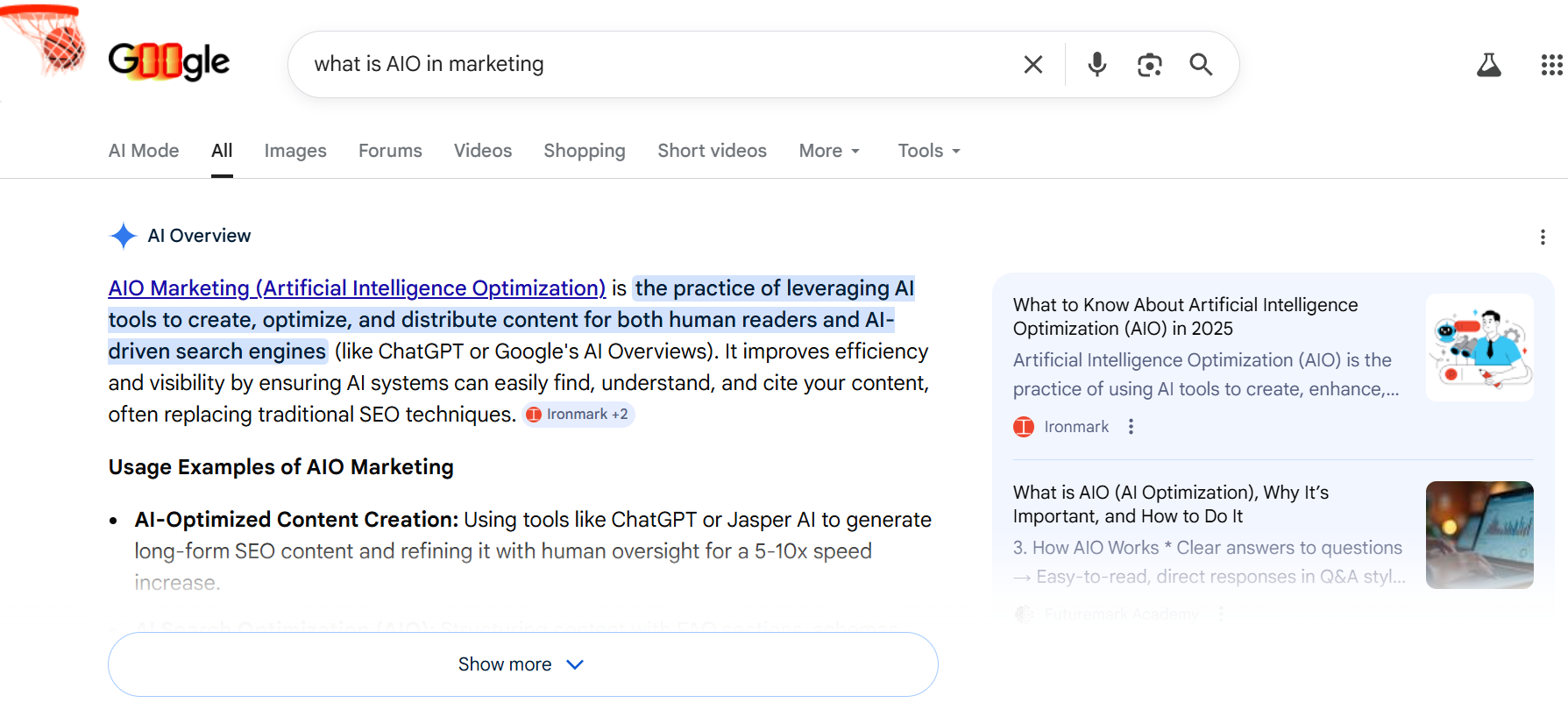
Image: An AI Overview explaining AIO Marketing.
Let’s look at another example. This time, we searched for “future of environmental engineering” on Google. The result below shows a blog article (written by our team!) on the topic of, you guessed it, The Future of Environmental Engineering. This content covered a trending topic, was optimized for SEO and AIO, and was written from the perspective of industry experts.
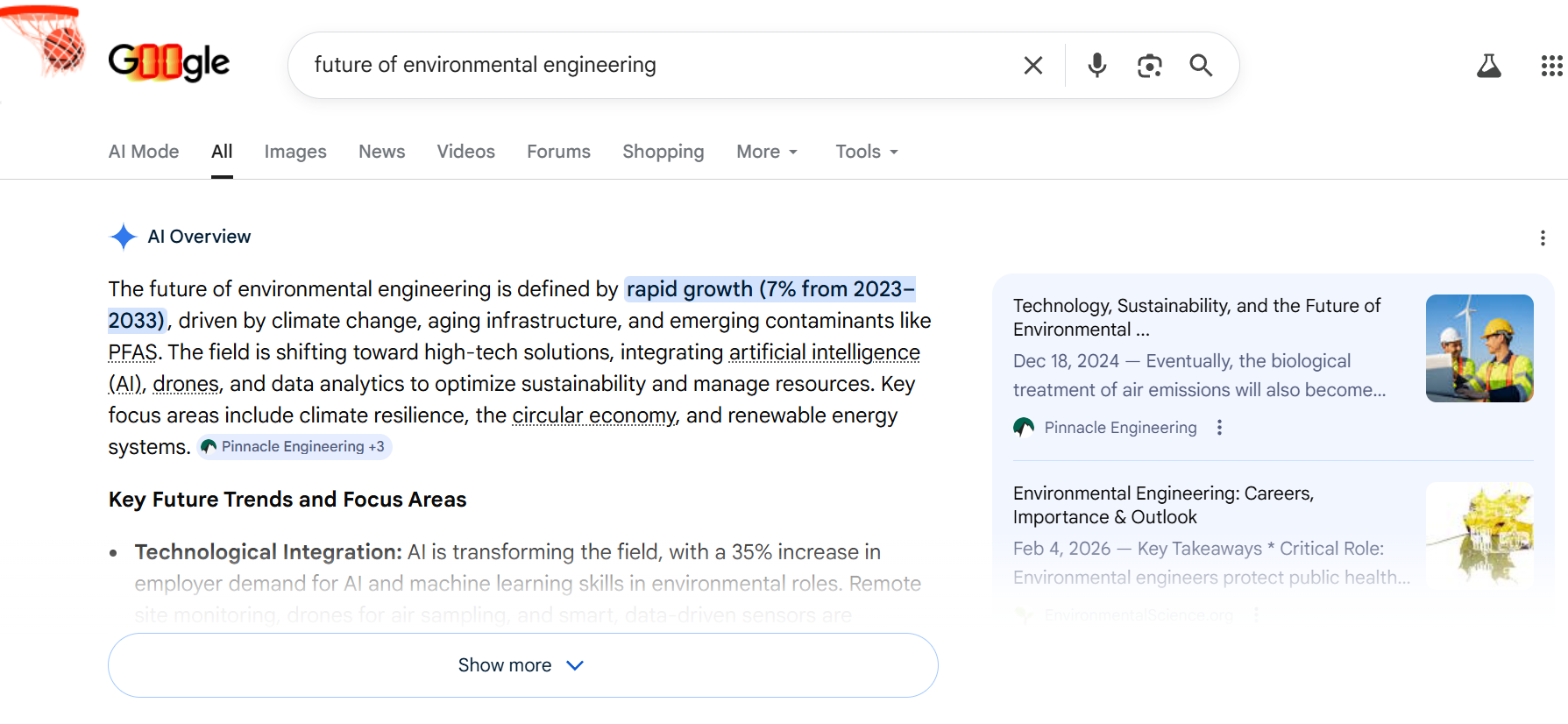
Image: An AI Overview explaining the future of environmental engineering.
Realistically, not every blog article you write will show up in an AI Overview or the search results of an AI tool. However, search engines still place high value on good, original, human-written content. And that means your articles will show up in search results if you follow content best practices and implement SEO and AIO strategies during the writing process.
4. Supports Your Sales Team & Business Growth Initiatives
We mentioned above how blogging can provide answers to common customer questions. This is great not only for visibility, but to support your sales team in lead nurturing or when prospects reach out for more information.
An example:
You’re a circuit board manufacturer who has noticed that customers ask many of the same questions before submitting their design files. So, you publish a blog article in the format of a checklist titled, The Top 7 Factors To Consider Before Submitting Your PCB Design Files.
There are two main benefits to this type of content:
- The informative topic provides value to the reader by giving them useful information without having to call or email you. And they’ll go into conversations with your sales team feeling more prepared.
- Your sales team can include a link to the article in follow-up emails after customers submit a quote request. Sharing a resource that answers basic questions frees up time for them to discuss more complex topics with customers.
Another example:
Let’s say you operate a tax firm. With tax season approaching, you decide to write a series of blogs about “tax tips for small business owners.” Each article in the series is tied to a specific service you offer. The intent behind this strategy is to attract the attention of potential customers seeking tax advice. They read the article, which contains links to the applicable service pages on your website.
Benefits for this type of content are:
- You demonstrate expertise in an area, which helps build authority. The links within the article provide a direct route to the service area you want to promote.
- Your sales team can share the blogs on their personal LinkedIn with an engaging call-to-action asking people to reach out and schedule a 1:1 call.
5. Gives Content You Can Repurpose Across Marketing
Blog writing for websites is a lot of work, but you can also get significant mileage out of each piece of content. Here are a few examples of ways to repurpose your blog posts:
- Dissect the content to create a series of carousel posts for LinkedIn and Instagram, each highlighting main points (topic categories) from the article.
- Write a summary for your company newsletter, then link to the full article.
- Turn a series of blog articles into an e-book (great for “how to” series!) and add it to the Resources section of your website.
- Submit the article for publication in an industry magazine.
We also recommend resharing the article on social media every few months to reach a new audience. If the topic isn’t evergreen (e.g., “trends” pieces), making a few small updates will help keep the content relevant. The more you share the blog articles with your networks, the more people you reach and the more traffic you will drive to the company website.
The Benefits Of Blogging are Worth the Effort!
As you can see, there are plenty of benefits to adding a blog to your website. And remember: you can approach this in phases. All you need to start is a strategy and a single article. The rest can be built out slowly (but consistently!) by tackling one topic a month.
Also, we know that business owners and marketers are busy. It can be difficult to pull in your experts for an interview or to help review and approve a blog article written on a complex topic. However, the time investment is well worth it when you get a new lead or a customer shares your blog article with their network.